
The pop of a bottle of champagne is but a moment in time. It often heralds a cheer, leading to the flow of fine and persistent bubbles, aromas of white fruit with floral touches and flavours of crisp apple, vanilla elegance and nuances of brioche. That moment reflects a journey; one of dedication, expertise, tradition and adaptation. And there have been few years in which champagne makers have had to adapt and innovate as they have in 2026.
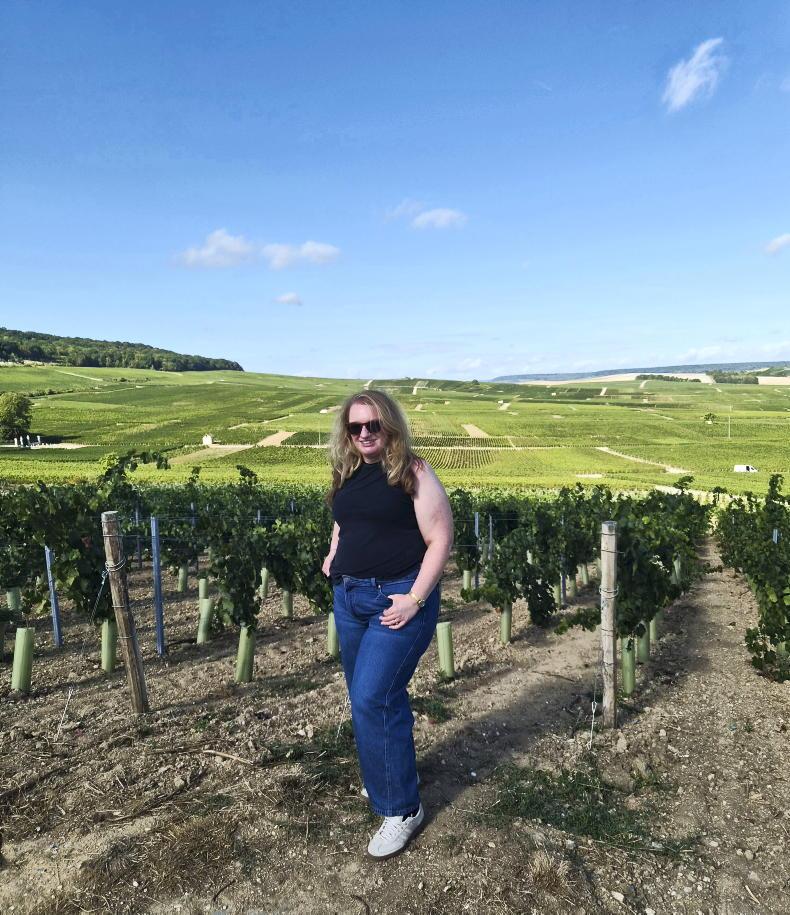
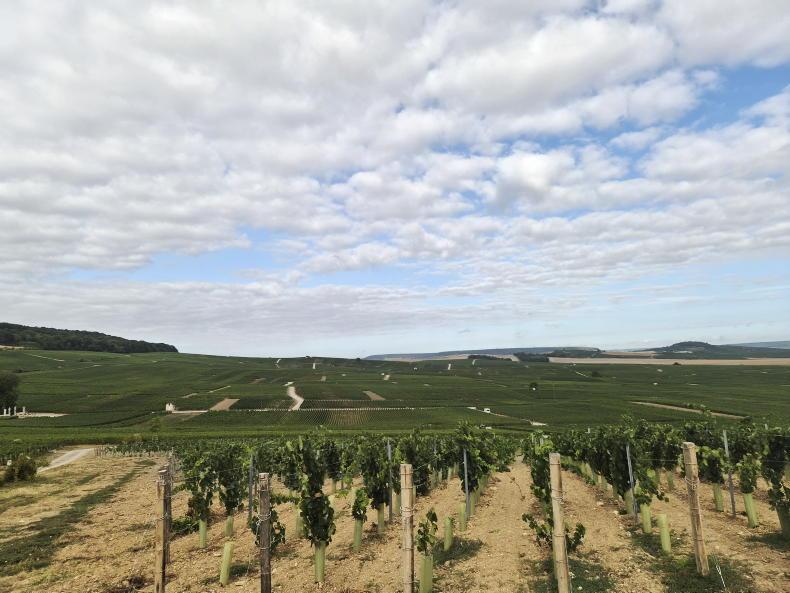
That became clear earlier this year as I looked out over the vineyards of Moët & Chandon in Chouilly, just east of Épernay in France. It was a sight to behold – vibrant, green and beautiful, but not a person to be seen or a truck parked, ready to load. Instead of vines heaving with grapes, they swayed bare in the gentle breeze. It was the first day of September and, in other years, this would be peak harvest time.
Moët & Chandon
About 3,500 workers are employed by Moët & Chandon in late August and early September to harvest the grapes spanning over 1,300ha, so to see deserted fields was a very visual statement that this was a year like no other.
It all started in February, when the first bud burst. This indicated an early start, which in itself brings risk as the vines are more sensitive to frost. And in the spring of 2026, there wasn't just one, but four, bad frosts. Approximately 40% of the harvest had been damaged by the end of March. Only once before on record had there been frost damage to such an extent. After the frost came the rain and warm temperatures, and there was some level of recovery. But then came the droughts and heatwaves – again, another four. And from May to August, the droughts were off the charts.
All of these factors led to one of the shortest growing seasons in living memory in Champagne.
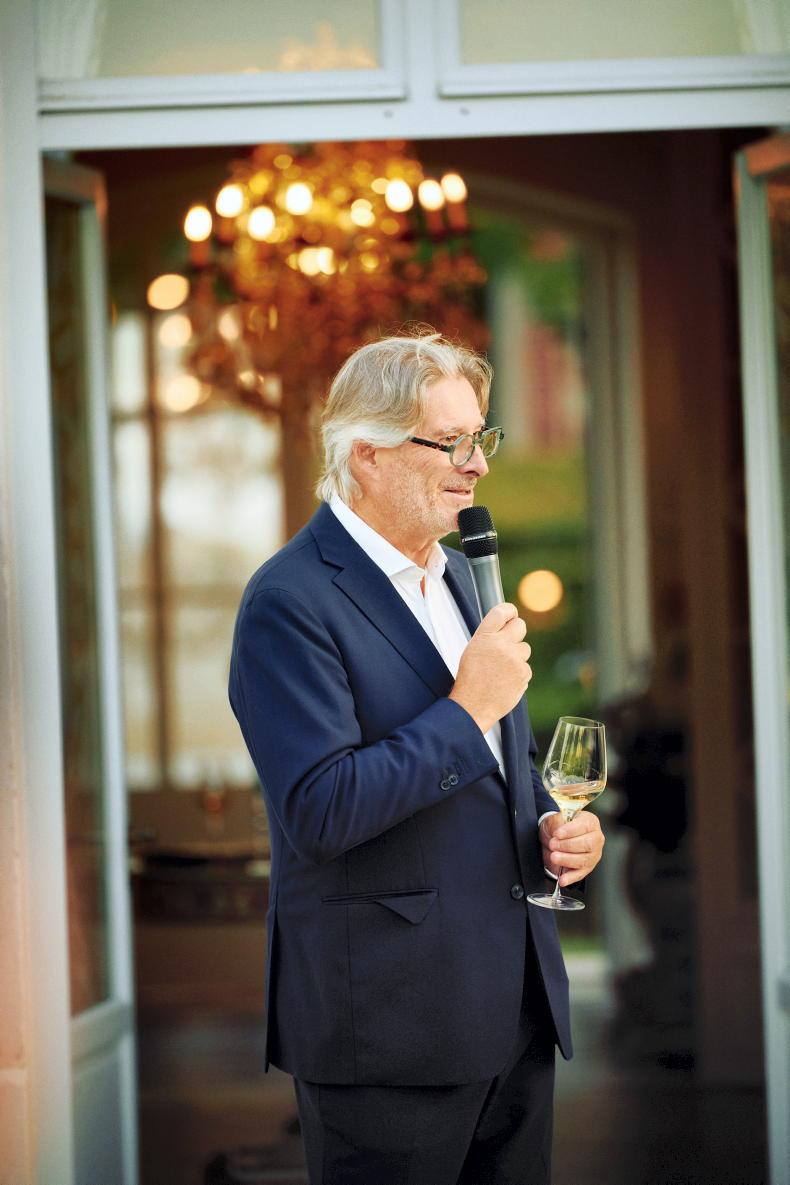
Over lunch in Fort Chabrol, Moët & Chandon’s research centre, I was in good company beside Benoît Gouez, Moët & Chandon’s cellar master, who gave some colour to the numbers.
“At school, a long time ago, we learned that from the blossoming to the harvest [of the grapes], you had to wait about 100 days,” he explained.
That determination has since evolved, and when Benoît joined the team at Moët & Chandon 28 years ago as an assistant wine maker, the projections had reduced to 90 days.
“In the past 10 years, that number has reduced even further," he said. "Now, once we have the blossoming, we make a projection of an average of 85 days, plus or minus five days. The shortest period was in 2003, at 81 days. This year, it was 69.”
It doesn’t take a mathematician to figure out that this is well beyond a comfortable window, and the impact could be seen on the vines. While a cluster of grapes usually weighs between 130-140g, the 2026 crop was in the region of 90-100g – again, breaking all records. But, in this situation, small isn’t necessarily a bad thing as the bunches were dense – dense in sweetness, acidity and aromatics.
Heatwaves and harvest
For Benoît, there was also a very important factor at play – there may have been frost and heatwaves but, crucially this year, there was no disease such as mildew or gray mould to give him headaches.
“The grapes were crystalline, super clean, with a good acidity balance," he said. "So, although we have a smaller quantity than we normally would, the quality is very good.”
A smaller harvest won’t impact the number of bottles on shelves – no need to run to your nearest off-license thinking champagne is in short supply just yet.
“Most of our production is non-vintage, which is a blend of wines from different years,” Benoît explained, “we rely on the reserves, so we have solutions to balance [the situation].”
Sometimes, there will be a vintage champagne made exclusively from grapes from one year. But will the quality of grapes be enough to declare 2026 a vintage year?
“That, I can’t answer yet,” Benoît replied when asked. “Because we have never experienced this before. To look at similar conditions, you’re looking back to 1959. Even [the exceptional season of] 2003, that I experienced, was different.”
For the overall production of champagne, hopes are that this year is an outlier and future harvests will get back on track. With climate change however, the concern is that this year’s conditions will become the new norm.
“I’m not scared, but I am concerned. You understand the difference?" said Benoît. "I believe that we have a bright future. But I’m concerned in the sense that we have to question ourselves, we have to continue to experiment, we have to find solutions for the future. We can’t rely on the past anymore.”
But he argues that champagne is always evolving. “You know, I’ve been with Moët & Chandon for 28 years... and the champagne we produced then is not the same as today.
"Today, we have more ripeness, more fruitiness, more intensity, more structure. We have less acidity, but at the same time, we have reduced the sugar content, so we preserve the lightness and the liveliness. And so we will continue to adapt and evolve in the same way.
“The Champenois have always found ways with the reserve wines, with the prise de mousse, with the way we grow our vines, with our valleys, to adapt and to find solutions.”
The plan is to look to the past to find solutions for the future, with hundreds of different varieties of chardonnay, pinot noir and meunier being replanted to secure the genetic resources.
“Our thinking is that probably in the existing DNA, in the existing genetics, we have solutions for the future,” he said.
These solutions won’t just be found within the house of Moët & Chandon. With an estate of 1,300ha, Moët & Chandon is the biggest champagne house in the world – by comparison the second biggest is 350ha.
As part of their production model, they have partnerships with 2,500 families in the region who grow grapes for the house. Unlike the vast green fields of Chouilly, Benoît explained, “Plots are generally small and most growers have other jobs. They either work their vineyards over the weekend, or hire others to do it for them.”
That connection to the land comes with a deep sense of pride and a determination by the Champenois to see champagne continue to thrive.
“Champagne is a village,” said Benoît. “So, from a market point of view, absolutely, you might see the different houses compete, and yes, we compete a bit on the market. But champagne is less than 5% of the bubbles in the world. So there is much more competition outside of Champagne than inside Champagne. We work together to find solutions, and there is a sense of solidarity in Champagne that you don’t find in in most other regions.”
Captial of Champagne
For wine lovers, a trip to Champagne is one for the bucket list. A two-hour trip from Paris, the journey from city to wine region is visual as you progress from busy motorways to charming French villages and then fields with vines as far as the eye can see.
The town of Épernay is known as the capital of Champagne, and a walk down the Avenue of Champagne is a must for any visitor. Along this 1.5km boulevard, the mansions and world-famous champagne houses celebrating the history – and wealth – of the area take centre stage.
Sitting amongst them is Moët & Chandon and one of the most impressive parts is their tour of the maison, which, through historic artefacts, tells the story and rich history of champagne from the Napolean era to present day.
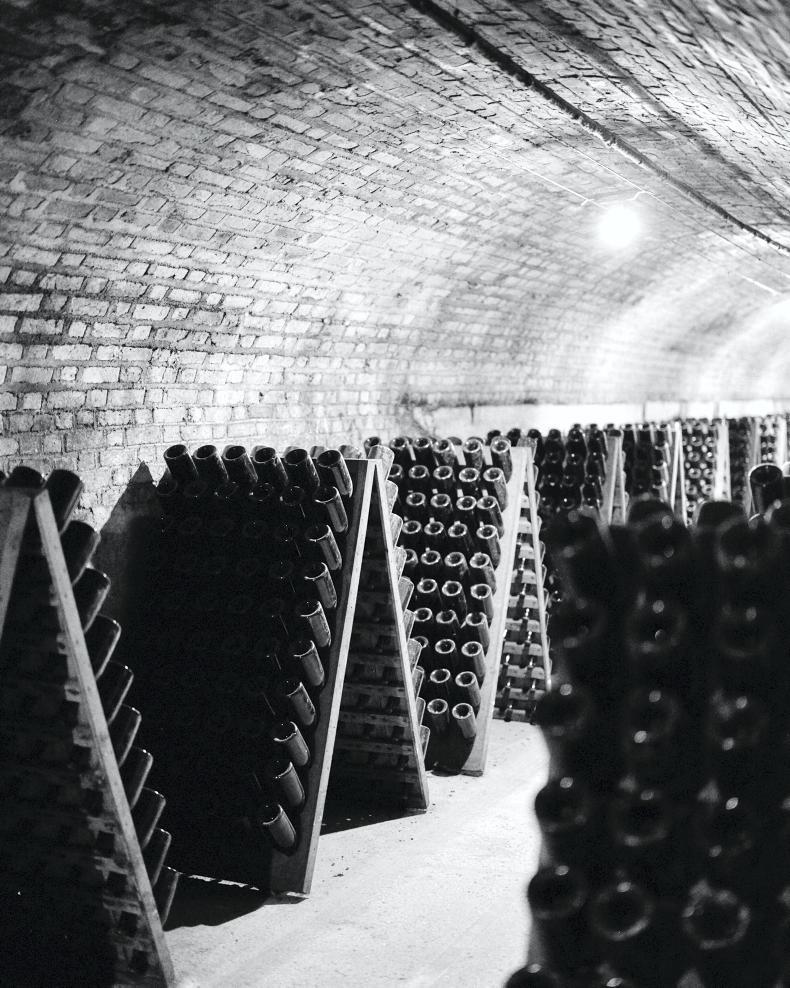
The real highlight, however, is the descent into the cellars which span 28km underneath the town of Épernay. The land and vines have done their job, and now the cellars must perform.
Here is where the magic happens for thousands of bottles of champagne each season – the fermentation, aging on the lees, the riddling and beautiful formation of those world-famous bubbles, all in anticipation of that moment of glory: that unforgettable pop.
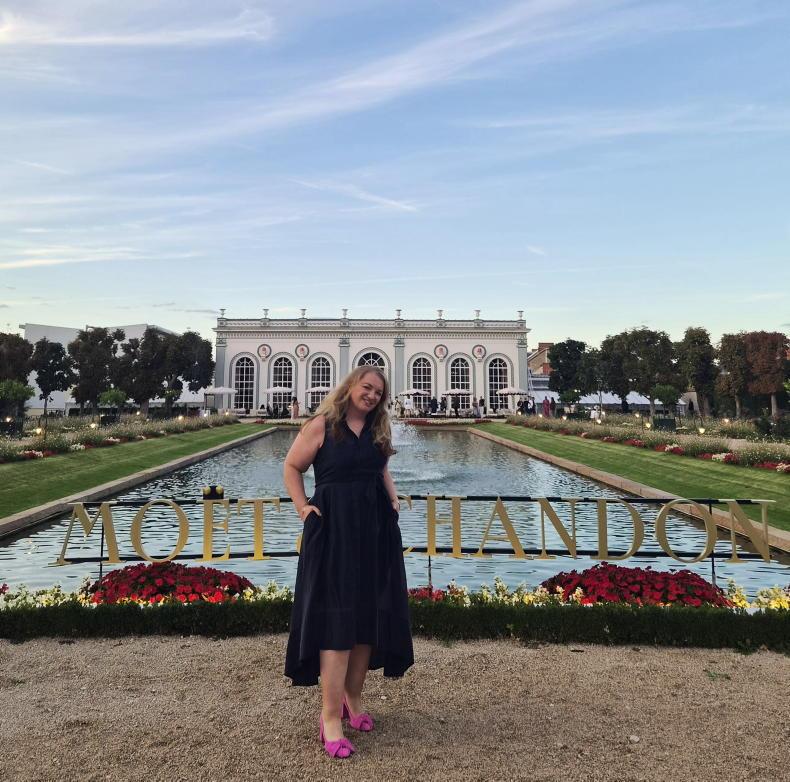
Ciara was a guest of Moët & Chandon on a harvest trip to Épernay.
How to get there: Flights to Paris are daily from Dublin Airport and at least twice weekly from Shannon, Cork and Belfast.
Trains from Paris Gare to Épernay take approximately an hour and a half. Alternatively, if you rent a car from Charles de Gaulle airport, the journey will take just under two hours.