


There is something deliciously appealing, especially as an Irish winter begins to close in, about disappearing for a week into a forest in Catalonia with nothing more pressing to do than think, write, walk and eat exceptionally good food.
For most of us, creativity will be on the fringes. Emails to answer, deadlines to meet, washing to do, animals to feed, people who need you and a phone that will never stop ringing.
I got to La Selva in northern Catalonia as a journalist, caught in that very familiar machine. I’d brought with me some creative writing of my own, stuff that was important to me, which had been continually sidelined by the more urgent work. What I discovered was something remarkably simple: time, and the rather special permission to be in the presence of other people who have also decided that, for a few days at least, their creative lives are worth their full attention and investing in.
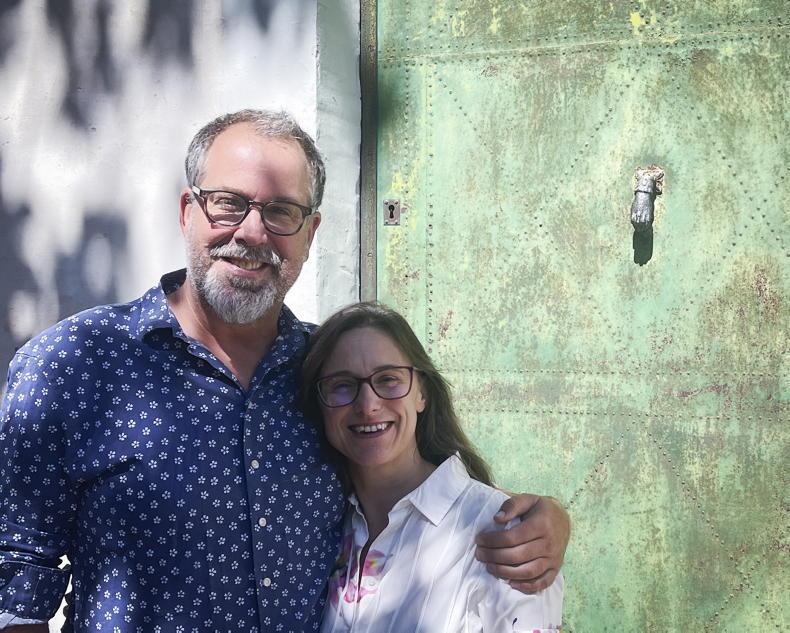
Maybe it’s no coincidence that the couple behind La Selva understand that so well. Irish composer and musician Rory Pierce (from Fermanagh) and award-winning novelist Priscilla Morris didn’t meet in Catalonia; they met at another venue dedicated to protecting creative time: the Tyrone Guthrie Centre at Annaghmakerrig in Co Monaghan.
“We were both on an artistic residency,” Rory remembers. “I was doing a composing residency, and Priscilla was doing a writing residency. We met at the coffee machine in the kitchen.”
His version is that Priscilla fumbled the machine, covered him in foam and just collapsed into giggles. Priscilla remembers it slightly differently: “You asked me to show you how to make a cappuccino when you already knew fine well how to make one,” she says, laughing.
Love story
Either way, something worked. They fell in love, and four years later the pair even bought the Gate Lodge at the Tyrone Guthrie Centre and lived happily in it.
Retreats and residencies were permanently embedded in their life together long before La Selva came into being. Both had established, substantial creative careers. Priscilla is a writer and creative writing teacher. Her novel Black Butterflies(set during the siege of Sarajevo) was shortlisted for the 2023 Women’s Prize for Fiction and has been translated into over ten languages.
Rory trained at the Royal Academy of Music in London and has performed internationally with several bands, orchestras and ensembles. The Divine Comedy, the Grit Orchestra, Hibernian Orchestra, to name a few. He is a composer and educator, having taught composition for many years, and has a long-standing interest in the natural world, which has led him into the wilds to record natural sounds.
They started thinking about creating a home of their own, somewhere a bit warmer perhaps, but with something of the spirit of the retreats that had been so formative in their own lives.
They found Romanyà de la Selva remarkably quickly. Set high in Catalonia’s mysterious hills, the medieval hamlet lies between mountains and the Mediterranean. The Costa Brava is a short car ride away, Girona, made famous by Game of Thrones, is close enough for easy connections, and on a clear day the Pyrenees rise on the horizon in glorious mystery.
“We fell in love with it,” says Priscilla. “Twenty minutes from the Mediterranean, surrounded by cork forests. Just magical.”
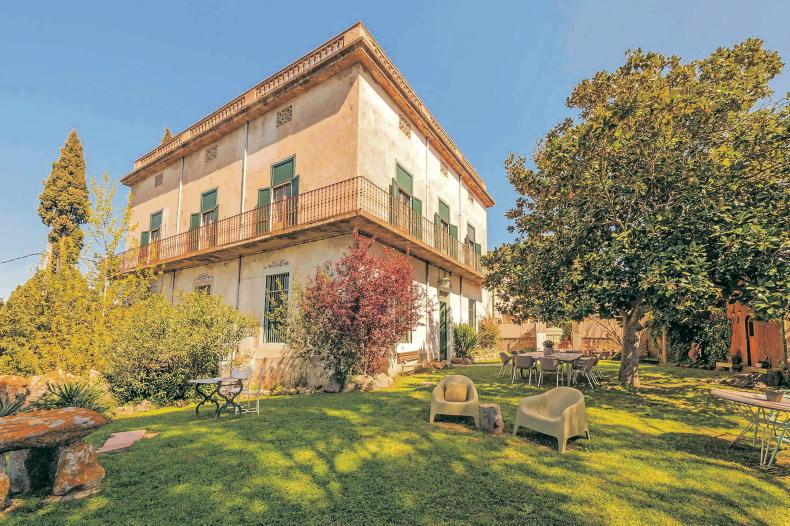
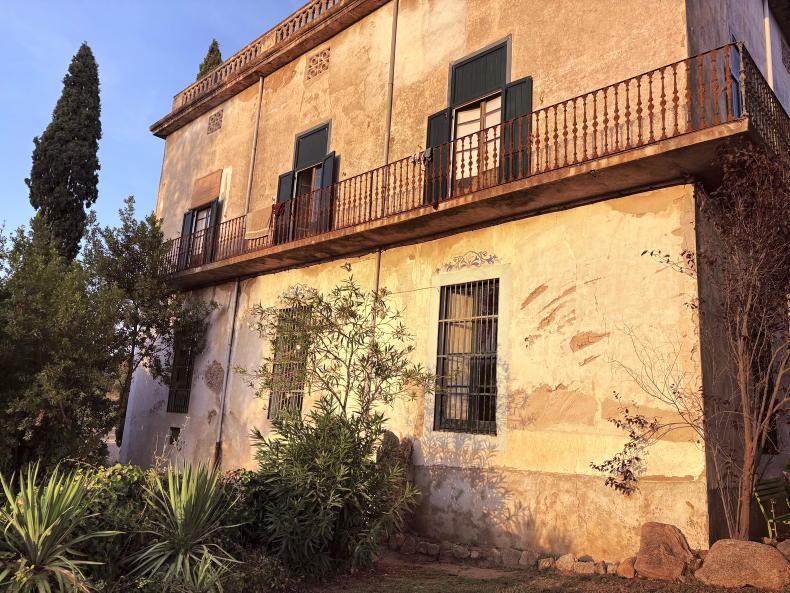
Finding the right property took longer. When they eventually found Casa Almeda and the adjacent La Daina (an 18th-century farmhouse attached to a 19th-century villa), Priscilla found herself asking the very question that would, in the end, decide everything.
“Could I write here? Could we make art here?”
The answer was yes. That is still the right question.
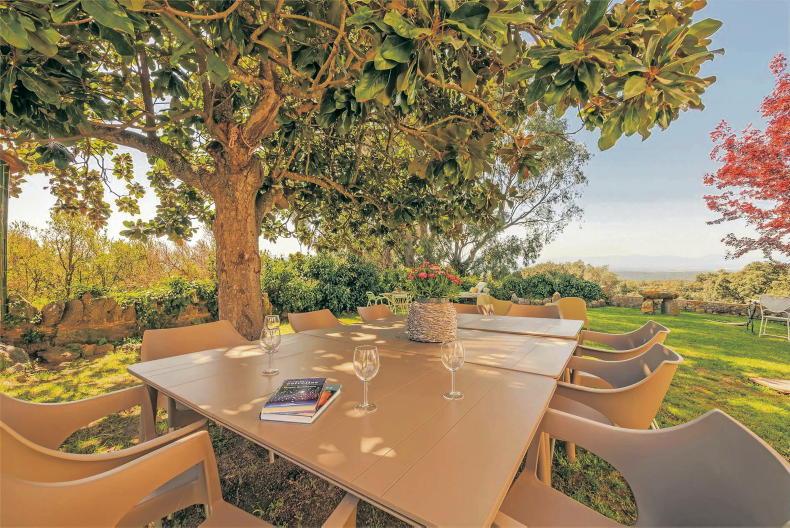
Writing tables sit in bedrooms and corners for stillness, alongside generous communal rooms, gardens, a saltwater swimming pool, and views stretching way across the wooded landscape towards the mountains. Behind the village, paths disappear into forests containing ancient dolmens and megalithic remains. In the other direction lies the startling blue of the Mediterranean, with the coves and cliff paths of the magnificent Costa Brava.
For Rory, musicians needed to belong here too.
“There are tens if not hundreds of places all over Europe that are ideal for writers and painters; there are very few that are good for musicians,” he says.
The thick walls and big rooms of Casa Almeda mean that music and composition can be very much part of the creative mix. The blending of disciplines is key. Writers meet musicians, artists meet photographers and the conversations go on over coffee, on walks and around the dinner table, well into the balmy night.
“It turns out we’re all after the same thing really,” Rory says. “Choreography, filmmaking, photography, music, writing. It’s all about structure, texture, form, modulation, editing, workflow.”
Priscilla calls it a “cross-fertilisation of ideas” (the creative energy that happens when you get a bunch of interesting people together and give them time).
Having experienced La Selva myself, I think that lack of pressure is crucial. There was no sense that creativity had to be performed. You could work intensely, wander into the forest, read, swim, talk or sit beneath a huge Eucalyptus tree: I even watched a family of wild boar skip across a neighbouring field at dusk. Somehow, removing the constant negotiation with ordinary life made sustained concentration possible again.
“Time and space are just sacred for an artist,” Rory tells me. “There are so many daily chores, and they’re always prioritised ahead of your creativity: house, family, work. Eventually, if you’re lucky, you get some time and space for your creativity.
“But weeks like this are precious: it’s a time for the rest of the world to wait.”
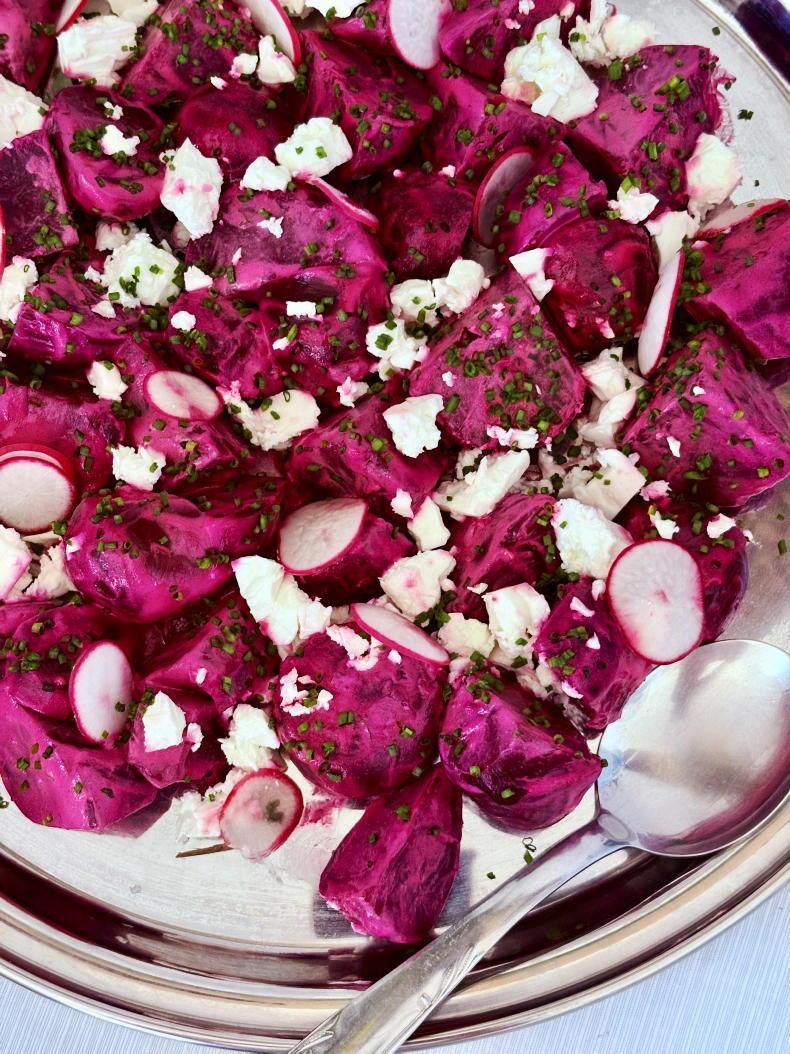
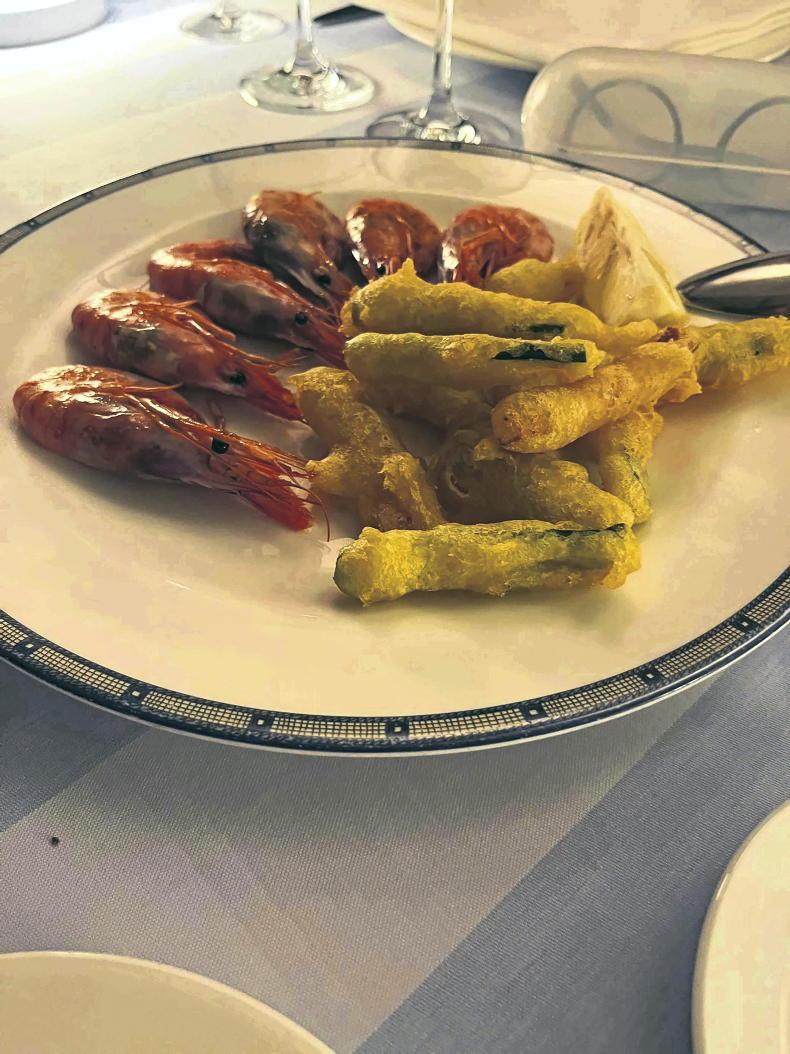
Then of course there’s the food. You couldn’t write about La Selva with any kind of integrity without giving it quite as much space. Meals are not an afterthought in the ‘creative’ process. They are part of the day, and they are part of the experience in the same way as the actual work. Around that welcoming table, they are an essential part of the day.
Chef Lucy Doherty was centre-stage in the kitchen while I was at La Selva. Lucy trained at Le Cordon Bleu and has worked at London’s River Cafe and at Michelin-starred AngloThai. Fresh, seasonal ingredients, from monkfish to figs, become colourful, generous lunches and beautiful evening meals, with perfect Mediterranean and Catalan influences.
Food is so crucial
As someone used to grabbing food around deadlines or farm jobs, it was almost ludicrously indulgent to be presented with three meals a day of healthy, delicious food that someone else had actually thought of, sourced, cooked, and then cleared away.
“Food is so crucial,” says Priscilla. “It gives delight three times a day. People really look forward to the meals, and they feel good and well nourished.”
Nourishment really is the word that sums it up. Not just creative nourishment but physical nourishment too, alongside friendship, landscape and rest. The sensitive couple also see something else occur during their retreats: strangers become a community. Rory says the role of host has taught him to get in the way less, not more.
“I think what I’ve learned is just to get out of the way and trust that every single person who comes on the retreat has their own massive universe to contribute.”
Priscilla agrees. Friendships emerge quickly, conversations develop and people who arrived knowing nobody leave connected.
A composer and a writer met in Co Monaghan because both had independently decided to remove themselves from ordinary life and give their creativity some undivided attention.
Years later, between the Pyrenees and the Mediterranean, they are creating the conditions for other people from Ireland and across the world to do the same. And perhaps that is La Selva’s real luxury. It isn’t simply sunshine, beautiful bedrooms, forests, warm swims or wonderful dinners, incredibly welcome though every one of those things may be.
It is being allowed, for a little while, to stop saying: “I’ll get to it when I have time.” Because here, finally, you do.
See laselvaretreats.org

