
Drones are gaining more and more traction in agriculture, from applying trace elements in the YieldWatch series, to scouting fields and creating prescription maps for the application of fertiliser. At Teagasc Oak Park, the capability of drones to apply cover crop seed into a standing cereal crop was on show at the recent Rooted in Health event.
The idea is to spread cover crop seed into a standing crop two or three weeks before harvest, ideally just before some rain to get the seeds germinated.
Craig Thackaberry of Drone as a Service, who was running a demonstration on the day, said: “You’re getting that seed in two or three weeks earlier, with zero damage done to the crop.
“You don’t want to go in with a tractor and broadcast it and damage the crop before harvest.”
This allows the cover crop to establish and start growing before the crop is cut. Getting a cover crop sowed early is vital to making the most of the crop and growing a decent biomass. This could be especially helpful after spring cereals and beans that are harvested a bit later.
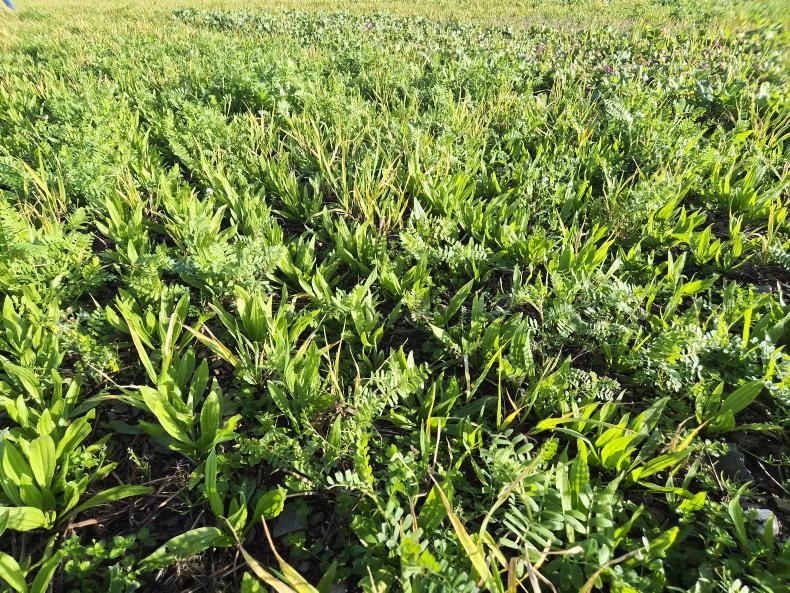
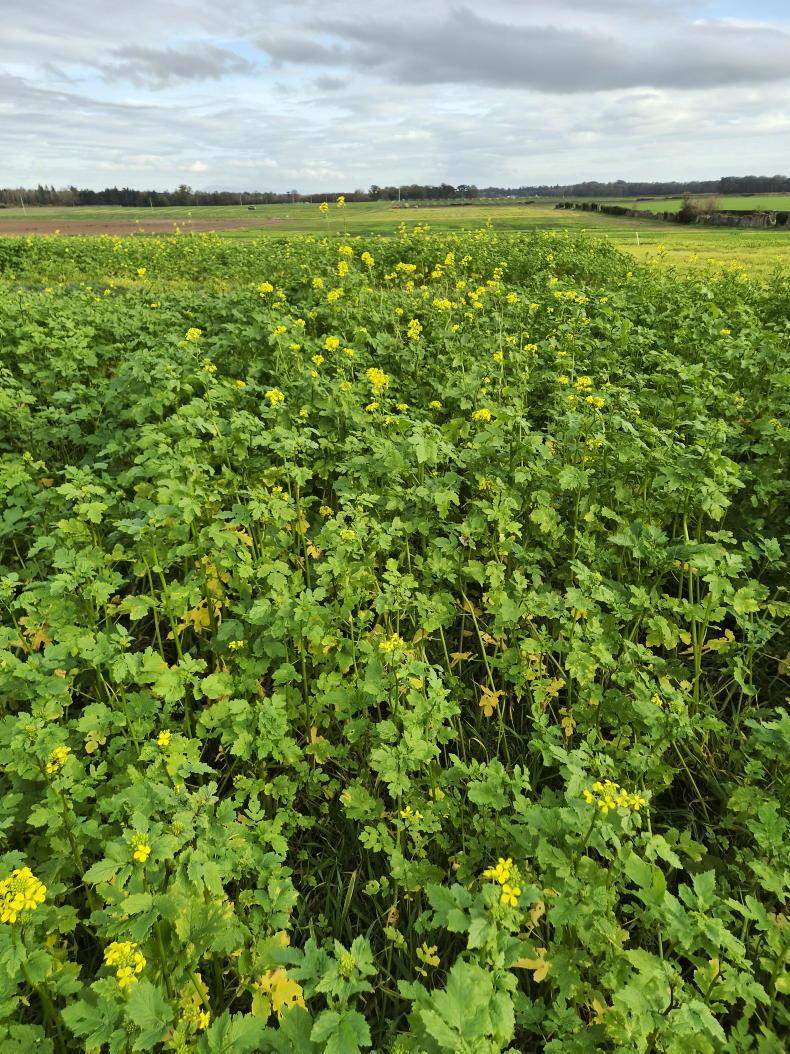
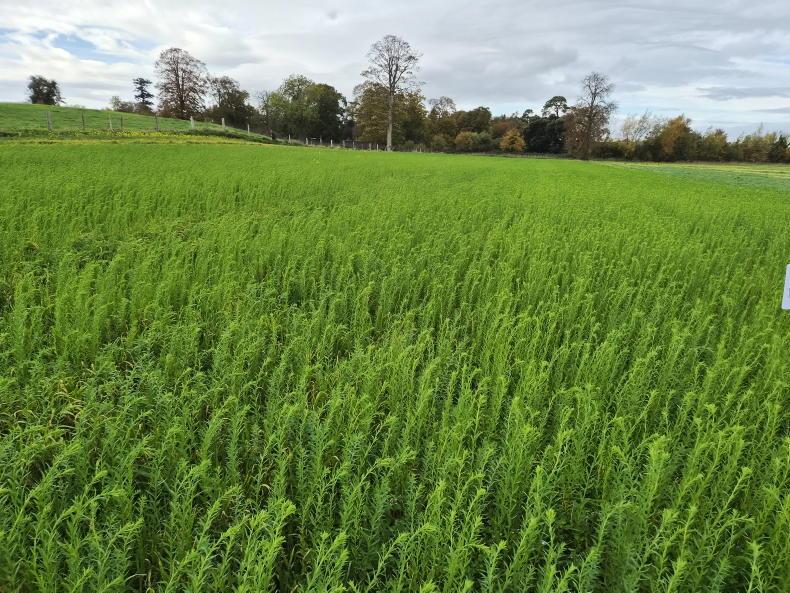
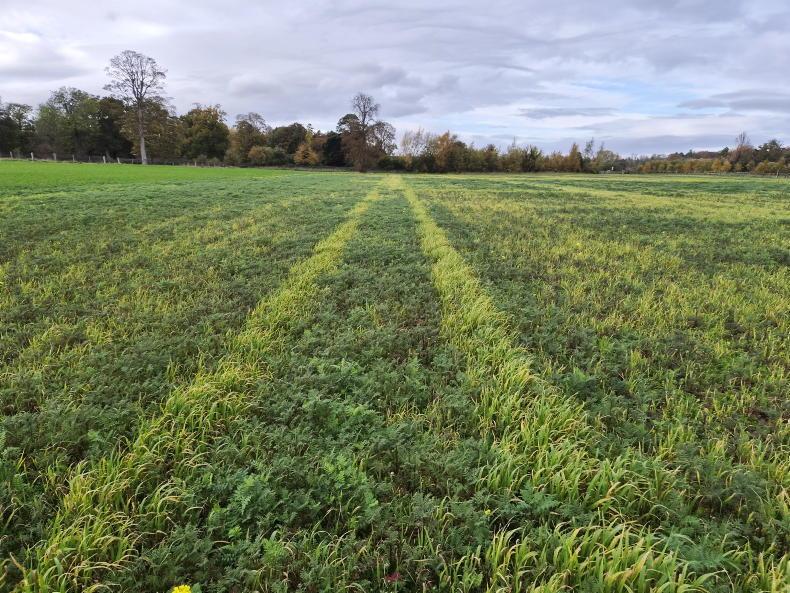
A trial conducted at Oak Park this year consisted of two different cover crop mixes, one was phacelia and vetch with the other being straight linseed. The drone-applied areas had established really well; there was no difference when compared to the cover crop planted using a disc harrow and seeder.
The drone applied the cover crop seed with a spinning disc at 2m above the crop to ensure that the light phacelia and linseed seeds did not drift with the wind.
In the demonstration on the day, where granulated lime was used, the drone flew at 5-6m above the ground and could cover about 10ac/hour when spreading fertiliser.
Cost
Mobile generators charge spare batteries while the drone is in operation, meaning the amount of time the drone needs to change batteries and refill with the product being applied is minimal.
“We have generators in the van. All you have to do when the drone comes back is refill with the product and change over the batteries,” explained Craig. “We’re working at a half-day/full-day rate, so that takes account of going with a very low rate or a much higher rate of product.”
He noted that the half-day rate is €500 and the full-day rate is €1,000.
“That’s for the first drone. On bigger farms, you’re going to need a second or third drone, they’re only €500 extra for the full day,” he added.