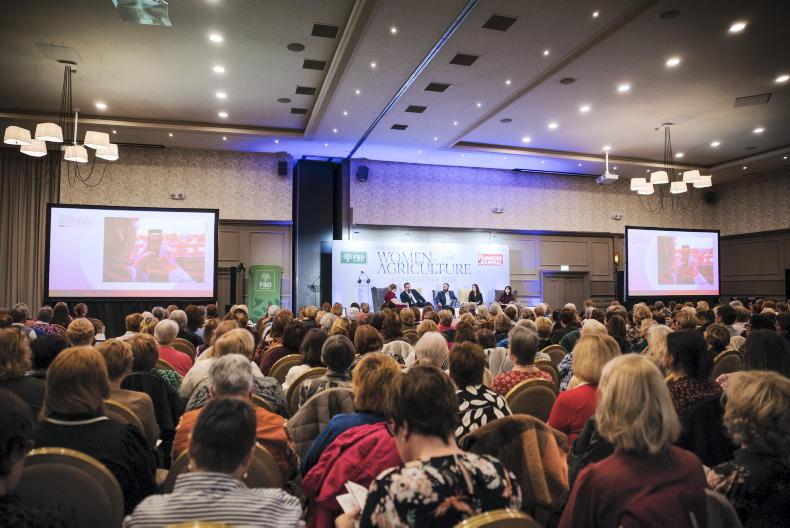

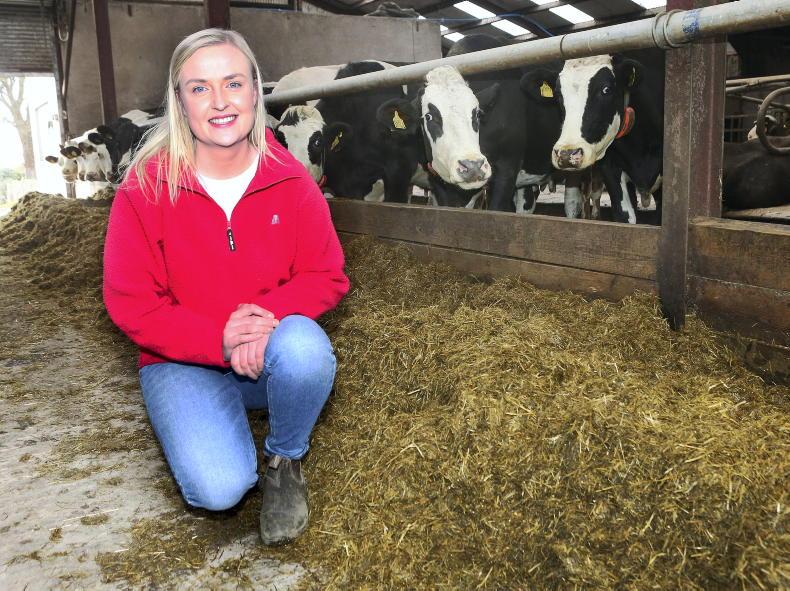
Earlier this month, I was invited to speak at the Fermanagh Grassland Club’s November meeting.
It had been over four years since I had last put together a presentation and stood up in front of a group to deliver it. It’s funny how quickly you get out of the habit of something.
Despite having given numerous presentations since starting my agricultural degree 13 years ago, I found myself feeling surprisingly nervous beforehand.
However, once it was over and I had the opportunity to chat with those attending, I was glad I had agreed to do it.
Story
Everyone has a story about how their farming journey began.
For many, it’s a lifelong passion, having grown up loving farming and never considering any other career.
For me, however, it all started with the ambition of earning enough money to buy an iPod Nano over 20 years ago, followed by the promise of a decent wage at 16 rather than going out and getting another job.
While I did eventually get the iPod, that decent wage still doesn’t look to be on the cards given milk prices this year.
Topics
One of the topics I touched on during my presentation was women in agriculture. It’s a subject I sometimes hesitate to bring up, partly because I can almost feel the eyes rolling when it’s mentioned.
I’m very aware that women have always played an important role in agriculture, whether by helping their parents, working alongside their husbands or keeping farms running behind the scenes.
However, when I was deciding what to do during my final years at school, the lack of women visibly working in the industry was something that nearly put me off studying agriculture at university.
Thankfully, a lot has changed over the past 10 to 15 years. Women are now much more visible and accepted throughout the agricultural industry, particularly in sales, advisory and other professional roles.
More to do
Yet, when it comes to women farming full-time and making the day-to-day decisions on farms, I still feel we have a long way to go.
Over the years, I’ve encountered various attitudes towards being a woman on a farm, and it’s not something that has disappeared.
Even this summer, a salesman arrived on the farm and tried to walk straight past me to speak to one of the men working with us. When he was directed back towards me, he still asked to speak to the man in charge.
When I explained that I was the person he needed, he was rather apologetic. I couldn’t help but laugh it off. These might seem like small incidents, but they highlight how easily people still assume that the person running a farm must be a man. I honestly don’t want to be treated any differently from a male farmer. I simply want to be treated the same.
Opened doors
At the same time, I’m conscious that being a woman in farming has probably opened some doors for me too.
I’ve had opportunities to sit on committees, take on different roles and even write articles like this, perhaps partly because I stand out as a female farmer.
It’s something I recognise and appreciate, although I sometimes wonder whether I feel a greater need to prove myself because of it. I sometimes think I have to establish my credibility before my opinion carries the same weight. Whether that’s genuinely the case or simply something I’ve built up in my own head, I’m not entirely sure.
When I decided to return home to farm full-time nearly six years ago, I certainly felt I had to prove that I was capable of doing every job on the farm myself. One particular incident still comes to mind.
At the back of our milking parlour, we have a wash-up tank that requires the mixing point slats to be lifted off when emptying it.
I’d watched the men working with us lift these slats on their own plenty of times, so naturally I thought I should be able to do the same.
Far from successful
Unfortunately, my attempt was far from successful.
Instead of lifting the slat, I managed to drop it into the tank, creating a much bigger job than the one I’d started with. Looking back, I wonder why I felt I needed to prove I could do it in the first place.
However, as time has gone on, I’ve realised that modern farming is much less about brawn and much more about brains. A hydraulic ram and a little oil can lift far more than any of us ever could, and as for those mixing point slats, a local engineering company has already developed a piece of equipment specifically for moving them.
Being a good farmer isn’t about being able to lift the heaviest object on the yard or carry out every physical task single-handedly. It’s about understanding your farm accounts, improving farm performance, identifying where efficiencies can be made and having confidence to make decisions to improve the business.
Those are the skills that will determine success in the years ahead, regardless of whether the person making the decisions is male or female.
Hypothetical
I’ve often tried to have a hypothetical conversation with my ever-so-logical and calm father about whether I’d still be farming if I had a brother.
It’s a conversation he refuses to entertain, and perhaps that’s a good thing. However, it does make me think about how many young women grow up on farms, love farming and would be more than capable of running the business yet never really see it as an option.
Not necessarily because anyone has told them they can’t, but because the expectation has always been that someone else will take over. And that’s what I hope continues to change.
When I agree to speak at events, sit on committees or take on roles outside the farm, I do it because I hope that, somewhere along the way, another young woman who loves farming might see that it’s a realistic career for her too. Equally, I hope that families might begin to look at their daughters as potential successors just as readily as they would their sons.
We’ve made great progress in encouraging women into the wider agricultural industry. Now, I’d love to see that progress reflected in more women farming full-time, running businesses and making the decisions on the ground.
Ultimately, I don’t want the next generation of female farmers to feel they have to prove they belong on a farm. I want them to grow up knowing they do.