


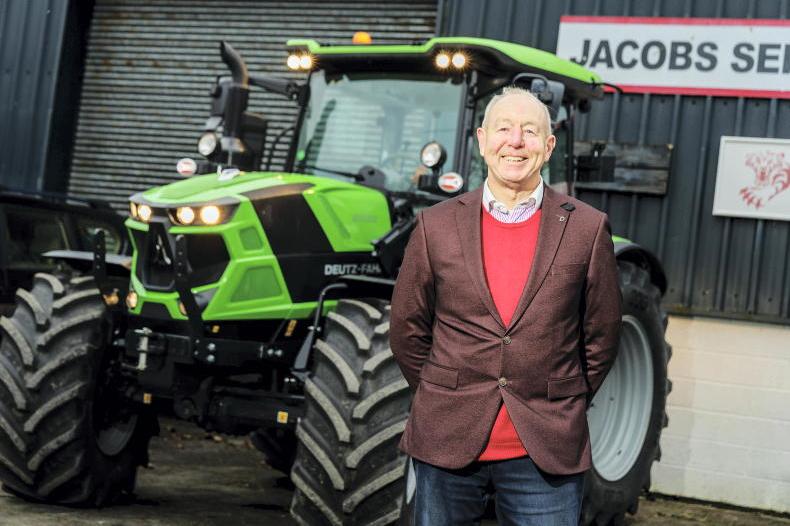
The agricultural machinery trade has evolved from a business built around selling and repairing tractors into a much broader, highly specialised industry. Jacob’s Service Station in Kilglass, Enniscrone, Co Sligo has been part of that evolution, with Michael Jacob now running the second-generation family business.
For Michael, who has witnessed that transformation first-hand, the appeal of the industry remains strong. “You have to have a real love for it first of all, or I wouldn’t be in it,” he says. “It’s challenging. Every day is different.”
The variety of that work is increasingly matched by its technical complexity. Modern tractors can house GPS systems and electronic transmission and automatic steering, meaning mechanics must understand electronic diagnostics as well as the traditional workings of engines and transmissions.
“When we started selling tractors, the cabs were optional,” Michael recalls. “Simple things like heaters and air-conditioned cabs were not to be heard of.”
Today, those basic machines have given way to advanced equipment. “State-of-the-art auto steering, you name it, we have it,” he says. The technology has improved productivity and efficiency, while changing the skills needed to maintain machinery.
At Jacob’s, fitters enter the profession through an apprenticeship programme. The four-year training route combines theory with practical workshop experience, giving apprentices the foundations for agricultural engineering.
“Our fitters would have come through the apprenticeship programme,” Jacob says. Mechanics continue to upskill as equipment evolves.
“They have also had to develop and learn to live with mobile data, IT-generated data,” he adds. Fitters need “a very high level of expertise for diagnostics and repair and fault-finding”.
The work calls for both digital confidence and practical ability. Mechanics must be able to identify electronic faults and work with computer-based systems, while retaining the knowledge to dismantle and repair machinery. “You do have to get your hands dirty in our business,” Michael says. Mechanics need IT capability alongside the practical skills to work on engines and transmissions. As he puts it, “It can’t be all done on buttons”.
The combination of practical and digital skills is increasingly sought after, with demand for skilled mechanics creating opportunities for new entrants.
Michael says finding skilled mechanics remains a challenge. “There is a shortfall,” he admits. “But for young people prepared to undertake the training and keep learning, the sector offers the chance to develop specialist expertise in an evolving industry.”
Careers beyond the workshop
Agricultural machinery businesses also depend on people working in parts, stores, logistics and sales. With six employees, Jacob’s Service Station relies on these roles working together, with the stores operation linking the workshop and mobile service to the components needed to complete repairs.
On the stores side, the work includes dealing with spare parts, stocktaking, stock logistics and ordering. Having the right components available is essential to keeping workshop jobs moving and supporting mechanics out on service calls.
“Parts efficiency and parts availability and parts sourcing is a huge, huge part of it,” Michael says.
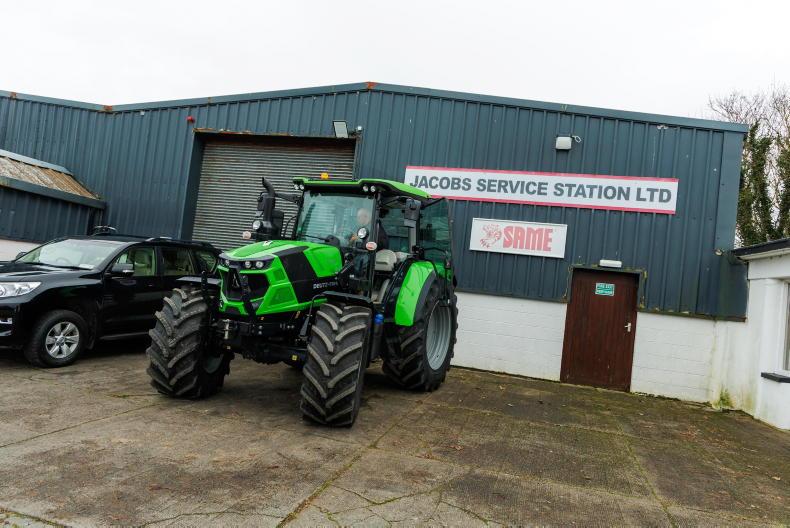
Sales and customer support offer other routes into the sector. Staff need to understand the machinery, the needs of farmers and the practical implications of keeping equipment operational. Customer contact is also part of the mechanic’s role, with fitters liaising over warranty issues and breakdowns. Technical knowledge must therefore be matched by communication and problem-solving skills.
The work can be demanding, particularly during busy periods on farms. Jacob’s provides breakdown and on-call cover throughout the seven-day week. During the summer season, opening hours run from 8am to 5.30pm, with emergency call-outs available afterwards.
“We provide a breakdown service and on-call service consistently over the seven-day week,” Michael explains.
That reliability is particularly important during busy periods, when machinery breakdowns can bring farm work to a halt. Farmers depend on having someone they can call to get equipment back up and running.
There are huge returns, huge benefits. But it does take commitment, training and embracing the current technology that’s involved
“We have a loyal customer base that we service and provide for,” he says. We’ve been with the machinery companies we represent for a long, long time.”
The work also means understanding pressures facing farms. In the west of Ireland, Jacob says, dry-stock and mixed farming remain common, while dairy and tillage operators have increasingly embraced new technology. Some larger farmers have brought work previously carried out by contractors in-house, but the cost of machinery can put it beyond the reach of smaller farms.
“Not all farmers will embrace it because they haven’t got the size,” he says. “It’s a mixed bag.”
Reflecting on what has kept Jacob’s going across generations, Michael points to the commitment required to maintain the business. “Hard work initially, and obviously commitment to the franchise we hold, commitment to the customer base we hold, and having a service and an efficient backup,” he says. “But also challenges in relation to continuity and who takes over and succession planning.”
The industry also brings its rewards. “There are huge returns, huge benefits,” he says. “But it does take commitment, training and embracing the current technology that’s involved.”
His advice to young people considering a career in agricultural machinery is direct: “If you have a passion and you enjoy hard work, go for it.”
See jacobsservicestation.ie

