
From engineering and food science to agricultural research, animal nutrition, genetics and international business, Dairy Day 2026 highlighted the breadth of expertise supporting Ireland’s dairy industry.
“Farming is a very technical endeavour nowadays, and there’s a lot of science behind it. It’s as good or as positive a profession as any other.”
That was the message from dairy farmer Mary Troy, whose route into the industry included studying food science and working in ingredients research and quality assurance with Dairygold before returning to the family farm in Newtown, Co Cork.
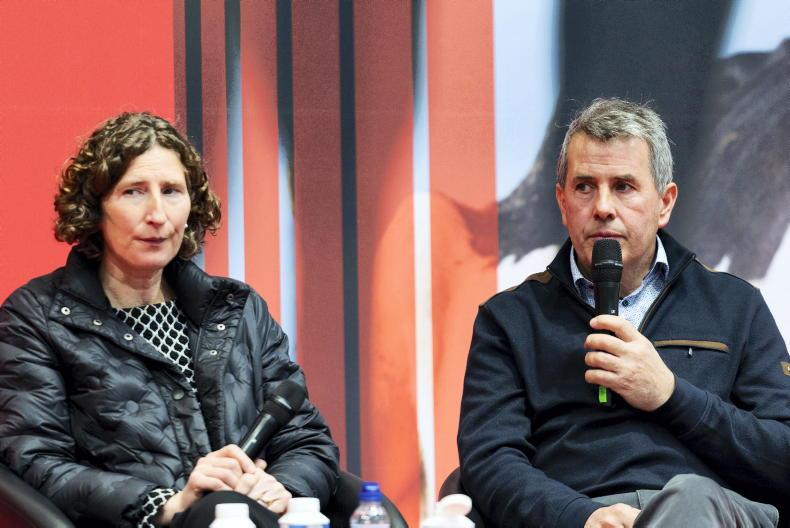
Speaking alongside her husband Robert Troy at Dairy Day 2026, the 2026 NDC and Kerrygold Quality Milk Award winners demonstrated how different professional backgrounds contribute to a modern dairy business.
Robert studied mechanical engineering before returning home to farm with his parents in 1988. Experience working on dairy farms in New Zealand also shaped his approach.
“Even though we were doing something similar at home, I suppose you always learn more when you go away from home and become more independent,” he said.
Speaking about one of the New Zealand farmers he worked alongside, Robert said: “Every morning, we did the jobs together. Every Monday morning, we automatically did the farm walk. Every Tuesday or Wednesday, he produced a map. How are we going on grazing?”
“It was just being around him, different small nuggets every day, and it just built a bigger picture then about how the business develops and how opportunity arises, and how you take advantage.”
Mary believes the technical nature of modern dairy farming deserves greater recognition.
“Our industry as dairy farmers is very technical now, and we’re as good or as positive a profession as any other,” she said.
She also highlighted the value of practical experience for young people growing up on farms.
“They learn skills like resilience, responsibility, feeding animals, looking after them, and they can take that through to whatever course they take in life,” she said.
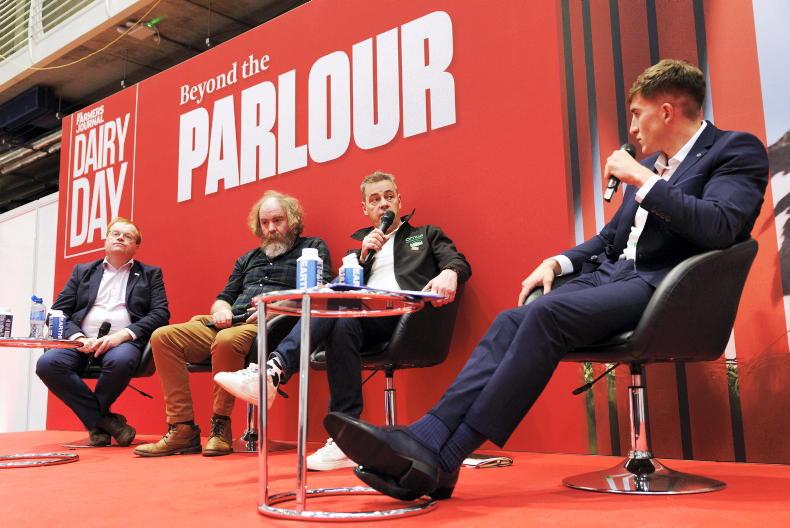
The expertise supporting dairy farming was also evident during the ‘Beyond the Parlour’ discussion. Joe Patton of Teagasc’s dairy knowledge transfer team works with ten dairy specialists and approximately eighty advisers around the country.
“My job is to make sure that we’re getting the right messages from research through advisers and onto farms,” he said.
Joe highlighted the close relationship between research, advisory services and education in Ireland, saying that access to researchers was a particular strength.
Support on the farm
Animal nutrition is another area where scientific knowledge meets practical farming. Cathal Bohane, technical and service development manager with Alltech Ireland, provides technical support to the company’s team and works across nutrition and farm resource efficiency.
“We have a nutrition team that back up the support on that farm just to guide the farmer through different avenues,” he said.
Alltech works with approximately 600 farms in Ireland, with its activities extending to specialist feed ingredients, slurry and silage management. The commercial side of dairy offers another career pathway. Tim Casey, commercial director for Ornua in Europe, directs sales teams in the Philippines, Singapore and Malaysia.
“My job is to direct the sales teams in terms of going out and securing the business in the countries where we operate, and bringing that business and bringing that value back to Ornua and ultimately to out members and the farming families,” he said.
“It’s a highly valuable business, and it’s an area that we see that we could expand,” he said of the opportunities in Asian markets.
Genetics and breeding provide another example of the specialist knowledge shaping dairy farming. The Genetic Gain session brought together farmers and industry representatives to discuss breeding decisions and the future of the national herd.
Among the contributors was Patrick Kelly, a Donegal dairy farmer and board member of Progressive Genetics. Having studied agricultural science at UCD before returning to farm in 1996, he explained how changes in the milk market influenced his breeding strategy.
“I felt the future was more around milk solids production, and focusing on grass or natural advantage,” he said.
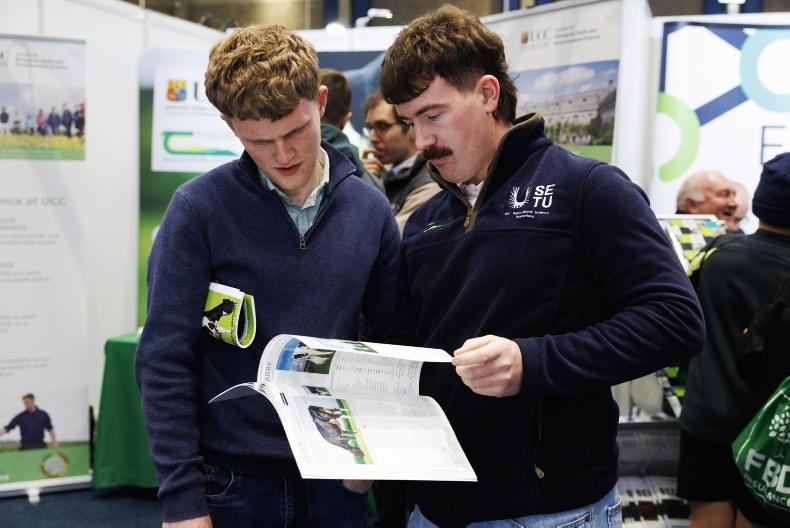
and David Prendergast, The Rower, Co Kilkenny check out the trade stands at the Irish Farmers Journal Dairy Day 2026. \Donal O’ Leary
The session also featured Michael Doran, chairman of the Irish Cattle Breeding Federation, and Dr Andrew Cromie, managing director for Europe with Sexing Technologies.
The Financial Focus session demonstrated how financial expertise is increasingly important in running a dairy business.
Dairy farmer Linda O’Neill spoke about the value of benchmarking and accountability through discussion groups.
“To make gain, you need some form of accountability, and you have to answer the questions, and you have to come back next year with improvement,” she said.
Mary Kingston, a dairy farmer and consultant, stressed the importance of turning financial analysis into a plan.
“It’s fine doing your financial comparison, but the final and most important step is to take those financial costs and layer them into your annual budget for the year ahead,” she said.
Across the sessions, a common theme emerged: modern dairy farming depends on people who can combine practical experience with technical knowledge, whether working on a farm, in research, animal nutrition or international markets.
For those considering a future in the sector, the opportunities reach well beyond the milking parlour. The industry needs people who understand the science behind production, the business decisions that sustain it and the markets that create value for Irish dairy.