


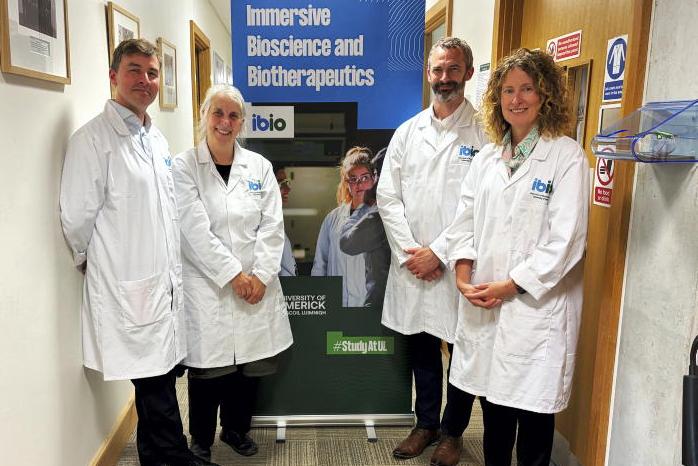
For students considering a career in science, the route from a university laboratory to industry is being brought into sharper focus at the University of Limerick.
It has launched a brand-new science degree designed to bring the university laboratory and the workplace closer together.
The Bachelor/Master of Science in Immersive Bioscience and Biotherapeutics, known as iBio, is a four-year integrated BSc/MSc programme combining scientific study, laboratory training and paid industry residencies. Its first cohort began in 2026 and is expected to graduate in 2030.
Although iBio takes a different approach to a traditional science degree, with industry experience built in from the outset, Dr Jakki Cooney, the course director, says its academic foundations remain central. “We’re not compromising on the academic standard. It’s more about using the strength of biopharma to help build better,” she says.
Developed with industry, iBio combines the scientific foundations of a traditional degree with the practical skills and workplace experience needed in biotechnology and biopharmaceuticals. Rather than teaching biology, chemistry and physics in isolation, it brings the subjects together through real scientific applications.
“When you teach it in context, you see them go, ‘Yes, now I understand why I need to know this’,” Jakki explains.
The course emerged around the end of the COVID-19 pandemic, inspired partly by UL’s immersive software engineering course. The university saw an opportunity to develop a similar model for bioscience, with academics and industry partners working together on course content and resources. Limerick-based Eli Lilly and Analog Devices (ADI) were among the first companies to support the concept. “The collaboration is not simply about inviting employers into the classroom,” Jakki points out. Industry partners help shape the curriculum, while recognising that students still need a strong grounding in the fundamentals of science.
“We are co-developing line by line the curriculum with them,” she says. “But they really respect that there are elements we need to teach the students that are not directly relevant to working in the industry.”
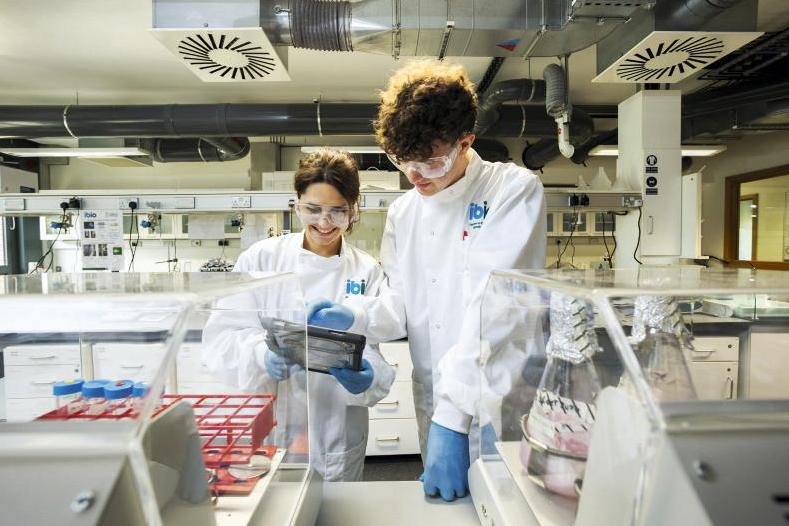
Industry partners have also contributed specialist expertise and equipment to the programme. Data analysis is another central element, with students introduced to bioanalytics, statistics and coding, including the programming language R.
“To be a good scientist, in any field, you need to be able to analyse your data,” Jakki says. “Science is based on data. It’s not based on opinion. You need to be able to analyse that.”
The programme is structured around a 50:50 split between on-campus learning – covering laboratory work, studio learning and data science – and paid industry residencies. Students will graduate with the equivalent of two years’ paid industry experience. “Students spend their time developing laboratory competence, working through increasingly complex exercises and learning how scientific work is carried out in a professional setting,” Jakki says.
The first industry residency is planned for May 2027 at the end of students’ first year. Rather than a general work-experience placement, it will be a graded part of the programme developed with participating companies.
Students will join a team, contribute to its work and become familiar with the routines and responsibilities of an industry setting.
“Can they read an SOP, a standard operating procedure, and implement it? Can they contribute usefully to meetings?” Jakki outlines some of the skills students are assessed on.
Communication, teamwork, resilience and taking responsibility are also built into the course. Students work in teams, organise tasks and report on progress. Within the first 10 weeks, Jakki says, they have delivered at least 10 presentations, written multiple reports and completed technical writing assignments, alongside LinkedIn training and CV support.
“We are hardwiring them for leadership and management,” she says.
Jakki believes the combination of scientific investigation, problem-solving and workplace skills will prepare graduates for a changing sector. As automation and artificial intelligence reshape research and development, she sees a growing need for people who can interpret information and investigate problems.
“I do think that we will create a cohort of graduates who are really into troubleshooting physical scientific problems,” she says. “I can see them in investigational roles.”
Practical experience
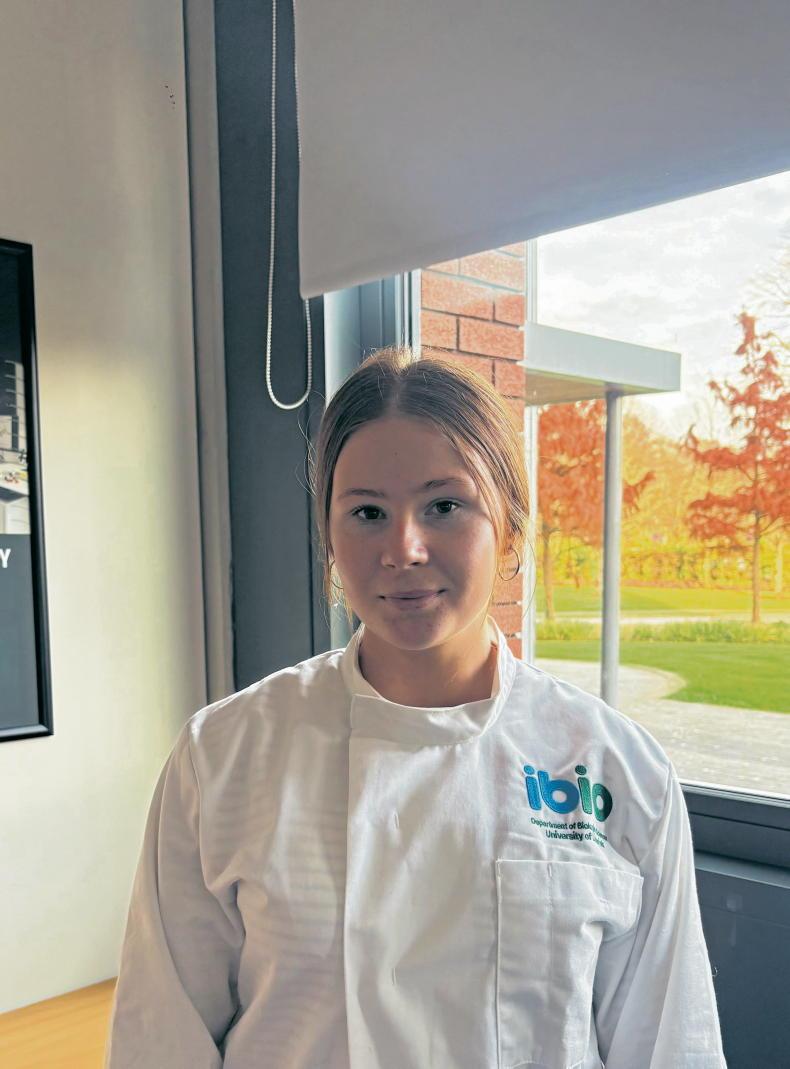
For Laura Kennedy (19) from Ballyagran, Co Limerick, the combination of science and practical experience was a major attraction. Growing up on a dairy farm, she had always been interested in science and chose predominantly science subjects for her Leaving Certificate.
She considered more conventional biological and chemical science degrees, but iBio stood out because of its four-year master’s qualification, industry links, work placements and block-based learning.
“The work placements are so vital, so valuable for when you’re developing your career afterwards,” Laura says. “It’s not just about learning the theory and hoping you can apply it afterwards, but actually doing that, I think is very important.”
Laura is part of the programme’s inaugural cohort of 34 students. Around 10 weeks into the course, she says the experience is already living up to her expectations.
“It’s just really exciting to be part of something so new and a really innovative way of going about bioscience,” she says.
Students spend approximately 40 hours a week on campus. A typical week includes biochemistry, data science, coding, Excel and laboratory sessions, alongside assessments, assignments and presentations.
“I love the labs. I love doing all the practical things and applying the knowledge and just carrying out experiments,” Laura says.
She has also developed a greater appreciation of the role of data in science. Before starting iBio, she had not necessarily considered coding and Excel central scientific skills.
“You wouldn’t think data science, coding and Excel are part of science, but they really are such an important part of it,” she says.
Her farming background has given her another perspective on what she is learning. Laura continues to help on the family farm at weekends, getting up at around 6am to milk the cows and feed the animals.
“There’s so much science in agriculture,” she says, pointing to areas such as milk quality and soil science.
“I was always curious to know the why behind things, why we do certain things on the farm. It was never just doing the job. It was, ‘Why are we doing this?’”
Although she initially had an interest in biotherapeutics and drug discovery, the course has shown her how many different directions a science qualification can lead to.
Entry is through the CAO and includes a portfolio element, with applicants assessed not only on Leaving Certificate results but also on qualities such as curiosity, tenacity, passion and problem-solving.
Employer’s perspective

From an employer’s perspective, Dermot Scanlon, founder of Limerick-based Serosep, says graduates need more than technical knowledge to succeed in a company environment. Serosep began in Scanlon’s home almost 30 years ago and now develops and manufactures products for clinical laboratories. He got involved in iBio because of its emphasis on practical learning and industry collaboration, having studied industrial chemistry at UL himself.
“It’s not all about your ability in exams,” he says. “It was more about learning on the job and working with industry.”
“You need people who can come in, get on with people. You need them to pick up things fairly fast,” he says.
He also points to quality assurance and regulatory affairs as areas with career potential in a highly regulated sector. He believes the programme’s emphasis on communication and teamwork is particularly valuable.
In his experience, the strongest employees are those who show initiative rather than waiting to be given responsibility.
“They’re natural leaders, they don’t need titles. They come in and say, ‘How can we get this done faster? It’s easier, better.’”
For students considering a career in science, iBio offers a route that connects academic study with the demands of industry. Laura, meanwhile, is keeping her options open for the future.
“I’m going to leave every door open and take every opportunity that comes,” she says.
“I definitely urge anyone who has any kind of interest in science to really look into iBio and take that next step in their science journey.”
For more information on the iBio programme, including entry requirements and course content, see ul.ie/courses or email: ibio@ul.ie

