
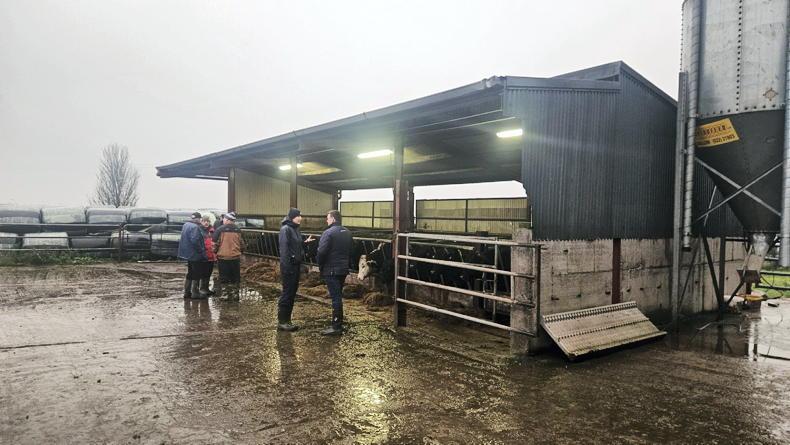
Ed Curtin runs a dairy-calf to beef system alongside an autumn-calving suckler herd close to the border with Co Limerick.
He is a participant in the Teagasc Signpost programme and is also in Dawn Meat’s Activate sustainability programme and he hosted a farm walk as part of this recently.
Working full-time off farm as an area sales manager for Dairygold – and with the farm split into three separate blocks, with some of it a Special Protected Area for Hen Harriers – Ed has tweaked his system in recent years to get the most out of it. Suckler progeny are sold as weanlings, while he finishes all the dairy stock.
About 70 dairy-beef calves arrive on the farm in February and early March. Purchased directly from farms, they arrive at two to three weeks of age and are almost exclusively bulls.
Traditional beef breed crosses
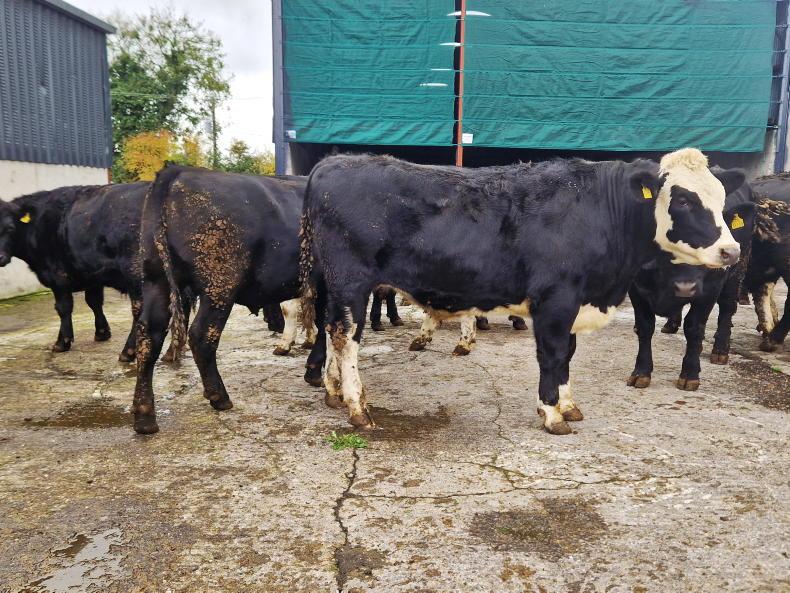
He usually buys Belgian Blue- and Charolais-crosses along with traditional beef breed-crosses.
The continentals and pick of the Hereford- and Angus-crosses are finished in an U16-month bull system, with the rest targeted for a 22-month finish as bullocks.
As the farm is fragmented, with a 25-minute drive between the two furthest points, Ed has to tailor it to work around his own time, but he is still equally focused on getting good and consistent liveweight gain.
With that in mind, the calves are held indoors until early July, and once they are weaned off milk, they are fed a bale of high-quality silage and 2kg of an 18% protein nut.
“The reason I split it is it gets them up and I get to observe them better than if I was feeding them once a day,” he said.
“I prefer to keep them in bunches of 16 or 17. I don’t like running bunches too big. I could have a bunch of 35 or so until the start of September, but I find the smaller ones perform better in groups of around 15 or 20.”
Choice
When it comes to choosing which to put through the bull beef system, he said: “I pick the bigger bulls that perform best over the first 10 months. If they have good daily live weight gain in that time, I like to see what they can do as bulls. The middle-of-the-road ones go as steers and they are finished the following autumn instead.
“I’d have some Belgian Blues, a lot of Charolais and Hereford. The best of the Angus are left as bulls too.”
The dairy-calf to beef weanlings have been housed over the last week. Since early September, they have been on a 1.5kg/day of a 14% protein ration.
In early December, they will all switch to a 19% protein heifer-rearing nut and good-quality silage with a DMD of 70% or 72%.
From that point, the ration feeding rate changes for the bulls; they go on 3kg and rise steadily until the middle of March when they go on ad-lib feeding until they are finished in June.
Bullocks are fed 2kg daily, with this reduced from late February before they get out to grass in the middle of March.
Suckler herd
The herd consists of 24 Limousin cows that he calves down from August to early October, and it’s a 100% AI system.
Most of the cows will be bred to either a male or female sexed straw of Limousin sires such as Drumline S (LM9577), Sliabh Felim Sterling (LM8929) and Brontemoor Salering (LM9655).
Replacement heifers are retained and calved down at 24 months. This year’s heifers were synchronised two weeks ago and bred to the Angus bull, Kealkil Prime Lad (AA4743).
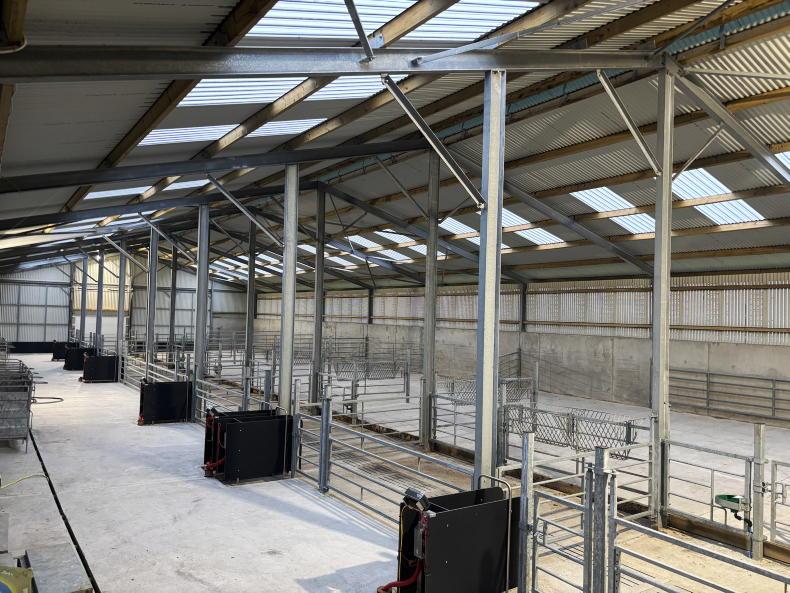
“They all go on slats and I have the ICE comfort slat mats for both the cows and calves,” he said.
Confident
“If cows go bulling on them, they are confident and I’ve had no issues. Winters can be long enough in our part of the world so I put those mats in when I built the shed in 2017.
“The calves are strong enough at that stage; if I was calving later, they would need straw. My cure for those is don’t calve the cows later. The cows go in front and there’s a creep for the calves.”
Ed’s farm walk highlighted the practical approach we are taking through ACTIVATE, working alongside farmers to improve efficiency and profitability while also improving emissions intensity of beef production.
His focus on genetics, grassland management and reducing age at slaughter shows practical changes can deliver improvements in both economic efficiency and animal performance, which also helps improve farm resilience and emissions reduction.
Dawn Meats recognises that sustainability has to deliver value at farm gate.
ACTIVATE is about supporting changes on farm that make commercial sense for farmers while also delivering positive environmental outcomes.