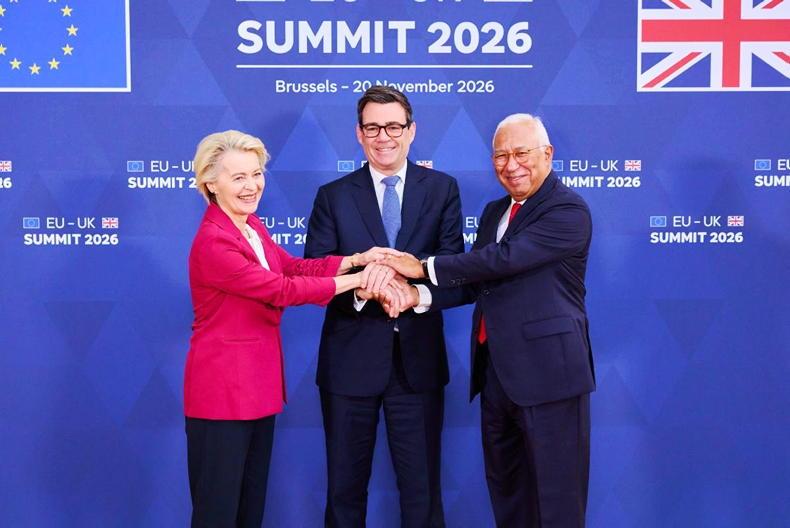

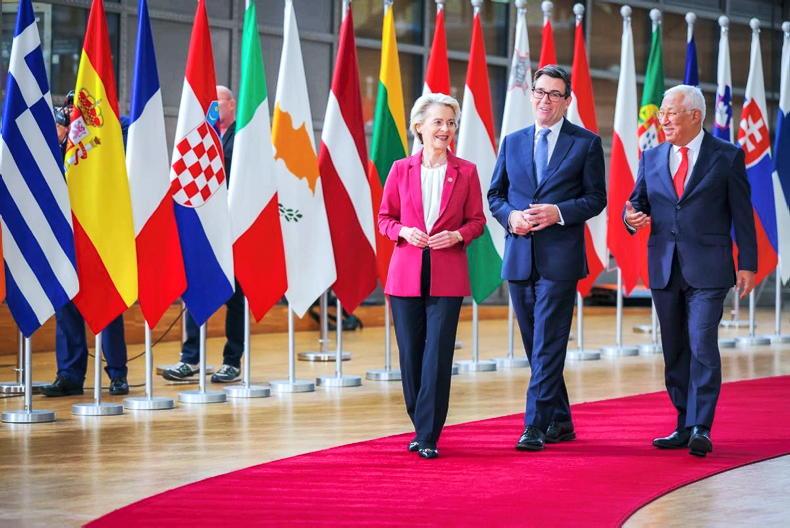
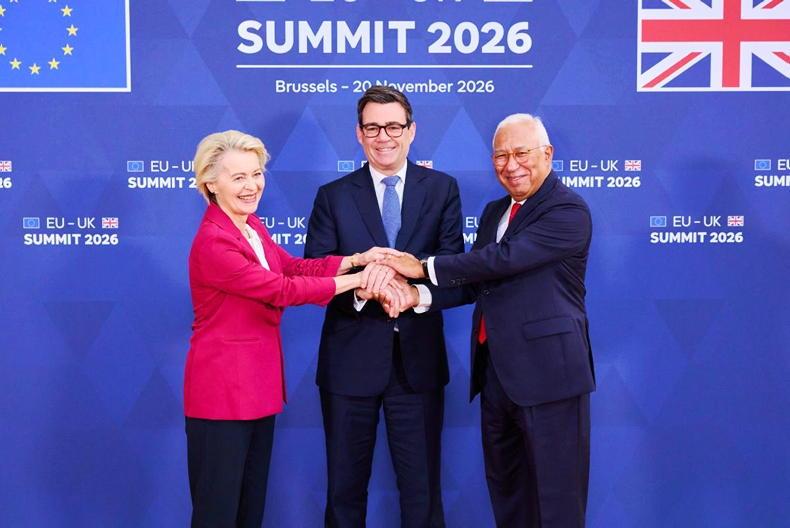
The Sanitary and Phytosanitary (SPS) deal between the EU and UK, announced in Brussels on Friday to considerable fanfare, had no real surprises.
It had been in negotiation since the middle of last year and will not come into effect until March 2028.
For the UK’s importers and exporters, it reverses one of the major non-tariff trade barriers that came with the UK leaving the EU single market.
For Irish exporters, it reduces the bureaucracy on agri-food shipments to Britain.
Generating the certification required is a substantial administrative burden on those companies.
The British Meat Processors Association (BMPA) provided the Irish Farmers Journal with a detailed breakdown on the cost of Brexit to their sector.
The figures
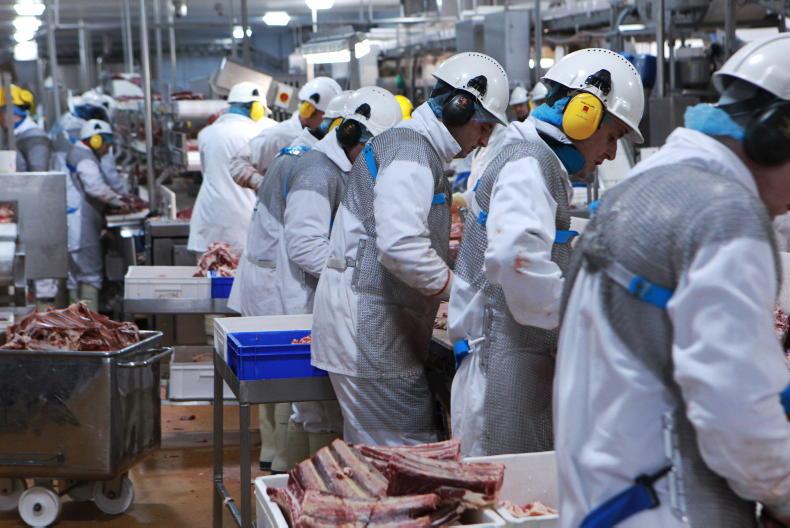
In the first quarter of this year, 52,380 Export Health Certificates (EHCs) were issued, requiring 104,760 certifier hours, the equivalent of 51.8 full-time certifier years.
The cost for this three-month period is £10.5m (€12.6m), and since Brexit came into effect, 1.45m EHCs have been issued at a total cost of £289.5m (€348.7m).
BMPA also refers to an Andersons Centre report and industry evidence, which puts the SPS cost per load between £2,500 and £3,000 (€3,012 and €3,614), equating to £50m annually for the red-meat sector.
BMPA also says that haulage costs for exports are typically £500 (€600) per load higher due to surcharges for border delays.
Irish benefits
For Northern Ireland, it will eliminate many of the politically controversial elements that were in the Windsor Agreement, which enabled Northern Ireland to operate in both the UK and EU single market simultaneously.
For meat processors north of the border, it will mean bringing carcase beef across from Britain for deboning will no longer carry the costs referred to by BMPA.
South of the border, meat and dairy exporters also had to reintroduce EHCs, and while there isn’t a detailed breakdown of costs, industry sources indicate that these are up to €250 per consignment.
For farmers across the island of Ireland, seed-potato imports will be able to resume after March 2028, and second-hand machinery imports from Britain will no longer need the deep cleaning that is currently required.
SPS deal was the easy win
These are the outworkings of the agreement that were well flagged ahead of the summit. They were widely welcomed across farm organisations and industry associations.
What was clear in the post-summit media engagement was that the current UK government is of a mind to explore developing the relationship with the EU further, up to and including rejoining the EU at some point.
In many ways, securing this agreement was straightforward. John Clarke, who is a former head of the EU delegation to the World Trade Organisaiton, told the Irish Farmers Journal this week that “this isn’t just a bilateral SPS agreement, it is the creation of a common SPS area for the UK and EU countries”.
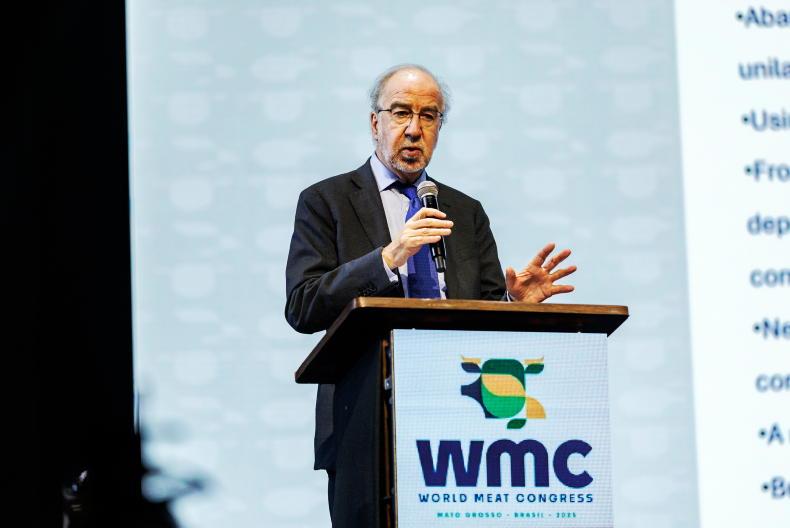
Much of the focus of the event in Brussels was around what’s next for the EU-UK relationship.
A full return to the single market isn’t attractive politically as, while it would reap benefits, it would come with the conditions of having to accept the free movement of people, a sensitive issue in the UK.
The term rejoining the EU customs union is mentioned as a possibility but, as John Clarke explained, “for the UK it wouldn’t make that much practical difference as they already have tariff- and quota-free trade with the EU”.
He also pointed out that any such move by the UK would “create an open goal for Brexit-minded people to attack the government for giving up the right to make trade deals with other countries and, in any case, it wouldn’t be joining the EU customs union, it would be the UK having an arrangement with the UK similar to what the EU has with Turkey at present”.
Clarke doesn’t see much potential in the brainstorming announced in Brussels on what else can be done.
“There may be some potential for minor deals in service sectors, but remember that the EU is very opposed to the UK cherry-picking the benefits of membership without the commitment,” he said.
Whatever the optics of exploring further possibilities, the reality suggests that the only real option for the UK is to begin the process of rejoining the EU. Clarke says “from an economic viewpoint, it’s a slam dunk but it is not just economics.
“Such a debate will reopen wounds and will be a divisive issue, and any UK government needs to proceed with caution on a campaign to rejoin.”
He thinks that, even with a positive political will on both sides, it would make for a tough negotiation. From Irish farmers’ and exporters’ perspective, a potential UK return to the EU would bring trade deals entered into by the UK into play.
Clarke points out that all trade deals have provision made for either party to walk away, and if the UK were heading back to the EU, that clause could be used: “there’s a provision in the agreement in the final provisions. Either side can pull out with a six-month notice period”.
He referred to accession countries to the EU as an example, saying that “under WTO rules, we had to compensate countries who were affected by that. I spent a lot of my time in the commission negotiating those agreements, and compensating USA, Japan, Korea, Canada and others for loss of market access”.
He was referring to the last wave of eastern European countries that joined the EU 20 years ago, when they had to adopt EU import tariffs and trading conditions.
If the UK was back in the EU he is clear that “there would be some modest renegotiation of EU FTAs with Australia, New Zealand and maybe India,” to offset the loss of UK deals.
Comment
It is now almost six years since the UK left the EU single market and customs union. In that time, farmers, machinery importers and agri businesses have learned to adapt to the new, more-cumbersome and costly way of doing business.
With the UK becoming part of an EU SPS area, the veterinary health certificate requirement and the associated costs will be removed by March 2028. That will be a positive.
As for the UK going further, that will be dictated more by political sentiment than economics. It is also clear from talking to people such as John Clarke, who is familiar with the machinery of trade deals, that while the EU, in general, would like the UK back as a member, they will not be soft negotiators.
Therefore, it likely that there will only be limited further deals apart of course from the full rejoining of the EU by the UK.
The EU will resist any other side deals it would see as cherry-picking and, from a UK perspective, in many cases there is little material gain. This deal has reignited the debate on the UK’s relationship with the EU. It will run for the remainder of this decade and beyond.
Where it ends will not be decided by economic logic alone, political sentiment will also have an input.